Simplicity = +Business.
Scaling App Architecture for 70% More.
📄 Overview
The financial application was growing quickly. In a few months, it went from offering a single financial product to having a wide variety of services and products causing difficulties like inability to scale multi-products, poor information architecture, and difficulty on use and access a new product.
Design manager
albo.mx
Revenue Scalability Index
Create a scalable architecture for the coexistence of multi products and features.
2
5
Solution
New architecture
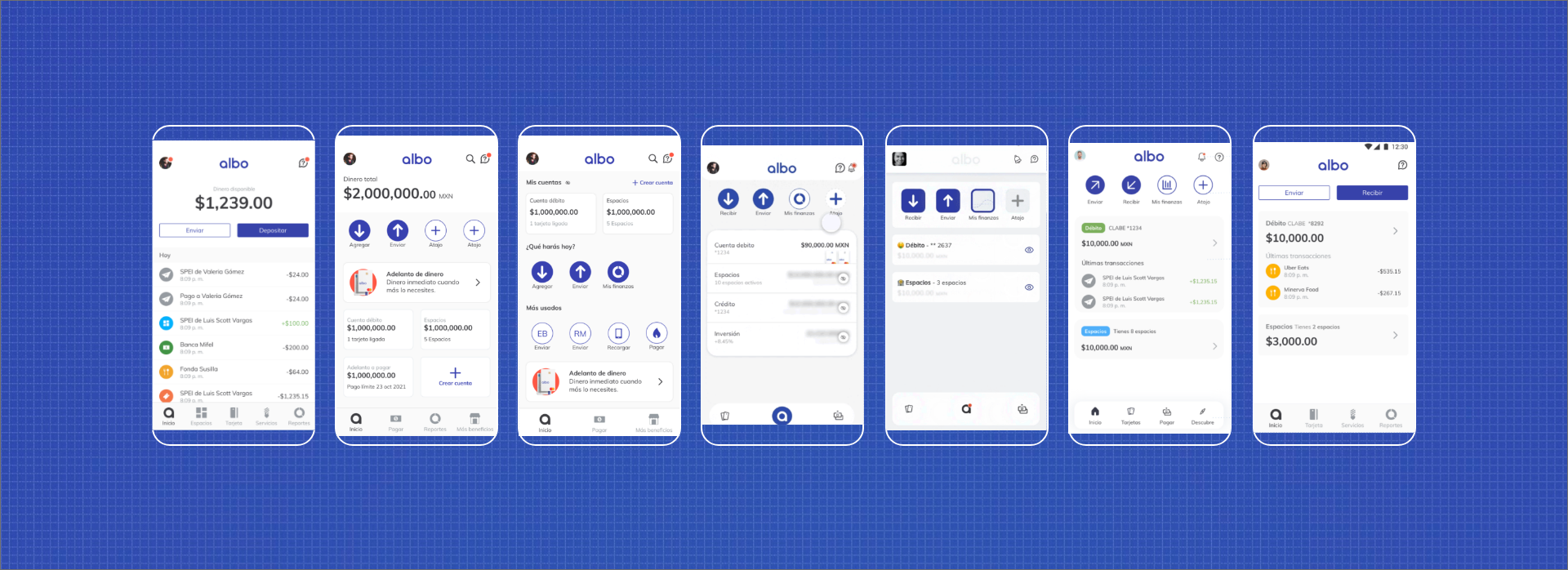
The solution was to create a new home that could give us the starting point for creating smart systems, with the minimum of change for the user and simplify the experience, growing the features opportunities.
Challenges
Design process
At the organization, we have a rough process of design ideate and iterations, fundamentally when we speak about research. Even that we plan a research sprint that lets us know more about the user necessities and how it can connect with these changes.
Architecture understanding
For different units change the architecture could mean different things, it was important to explain what is not an architecture change and what it is, to avoid chaos between the product unit and give certainty to other teams that were planning and delivering value.
Making a clear goal
I worked with the product designers team and User researchers for this project and allowed me to connect the C'levels necessities with the actions made by the team, it was very interesting how you still design by people connections, definitions, and goals alignments.
Design process
Scope
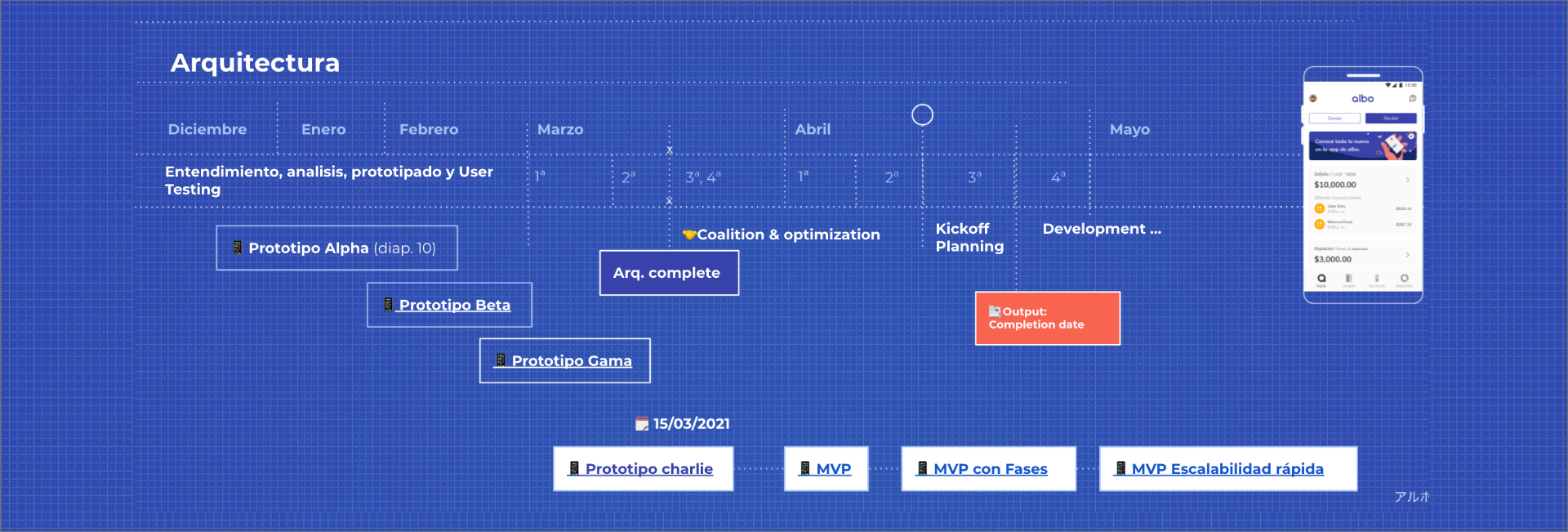
In any project we do not have all the year to know the future for the application, thats why we build a timeline that could guide us and limit our actions to be on time with the expectations of the stakeholders.
What is complete?
I worked with the design team and stakeholders, managers, and head to establish clear rules of the project DARCI structure, goal, and how we impact the business with this action.
Research
Interviews
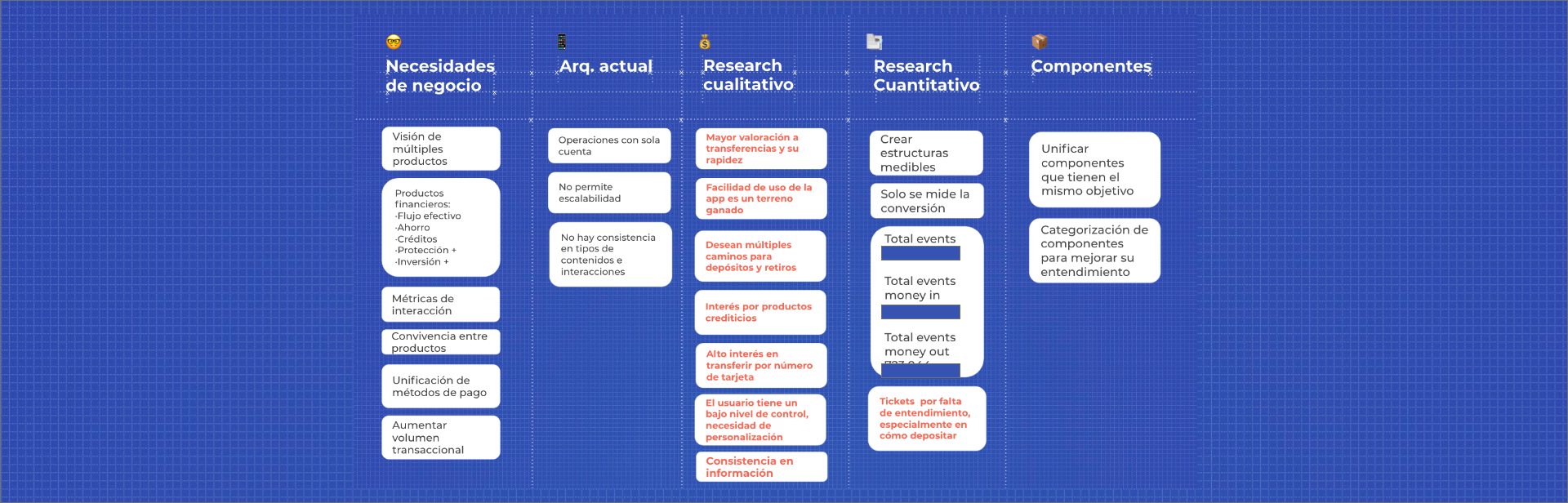
We interview inside and outside the company many people in 4 different categories, friends and family, collaborators, clients, and outsiders.
Iterative User testing
At every stage of the design iteration, we did several user testing for simplifying our ideas. Discovering which of them are more efficient and find the equilibrium between what is important for the clients.
Mapping
How to watch all the navigation universe
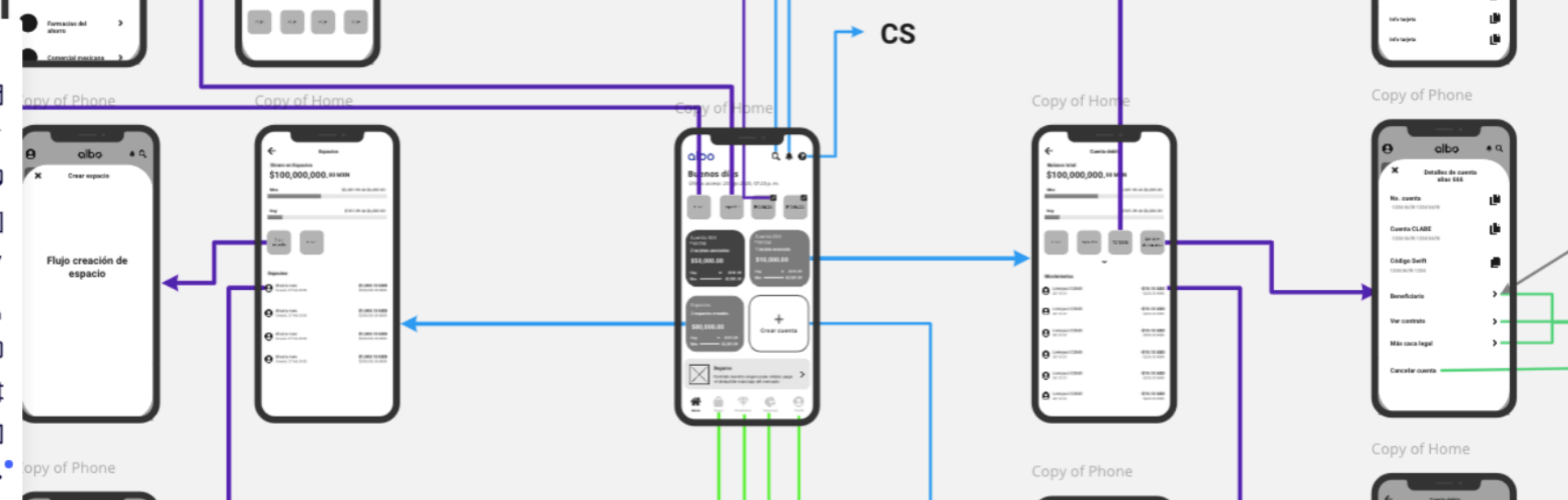
We also map all the processes in the application to understand the patterns and discover opportunities to create a systematic way to solve them.
Patterns
Most importan, less important, not to important
Some time ago I read that the patterns do not create, they are discovered. And nowadays I kind of do not agree with that, we find an opportunity to set a system from the discovery with the clients and the mapping so we conclude in 3 simple stages of importance.

Solved
New home, interaction and navigation
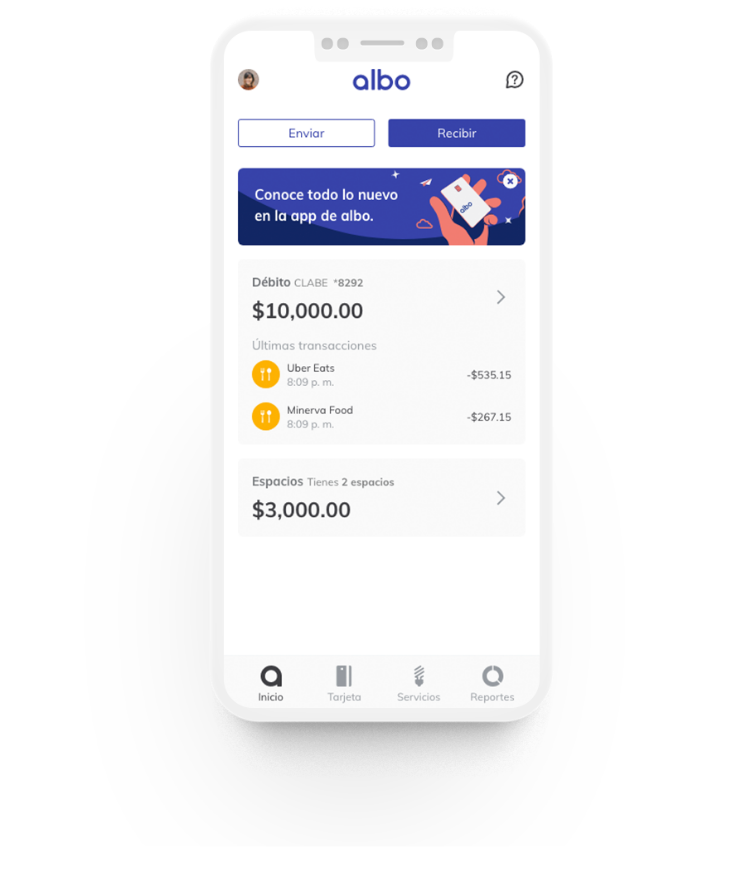
The new home refreshes the experience of the user, giving them new abilities to manage their money and also a plug and play system of new possible products from the company.
Communication
One of the most important things for the clients and the company is a way to communicate and give the feature of having a conversation whit the app, that's how we have a banner system that brings the conversation to the front giving to the client a channel to interact.
Impact
Product card component
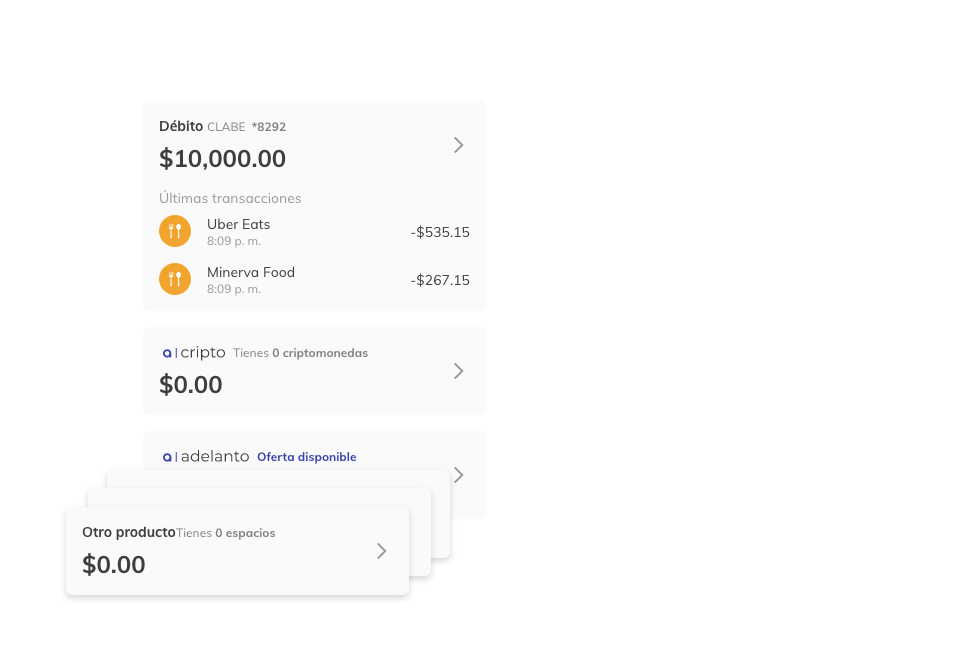
This is the component that makes all the magic, when any stakeholder says, what is gonna take? I used to answer maybe it's only one component, and sound simple but it's powerful, it creates the stage to have many variations but also creates a protocol for easy understanding.
Project learnings
Listen
I deal sometimes with this project trying to cover the necessities of different units, it feels like I was affecting all the products at the same time, gives certainty to other teams, and also cover the client's necessities was something I'll learn a lot.
Connect the people
I enjoyed a lot listening, negotiating, and trading with the teams of other products. Connecting the goals of my team with the goal of the company and have fun even that we have an intense sprint. I remember saying to my team. This hard challenge is going to make us stronger and better designers.